
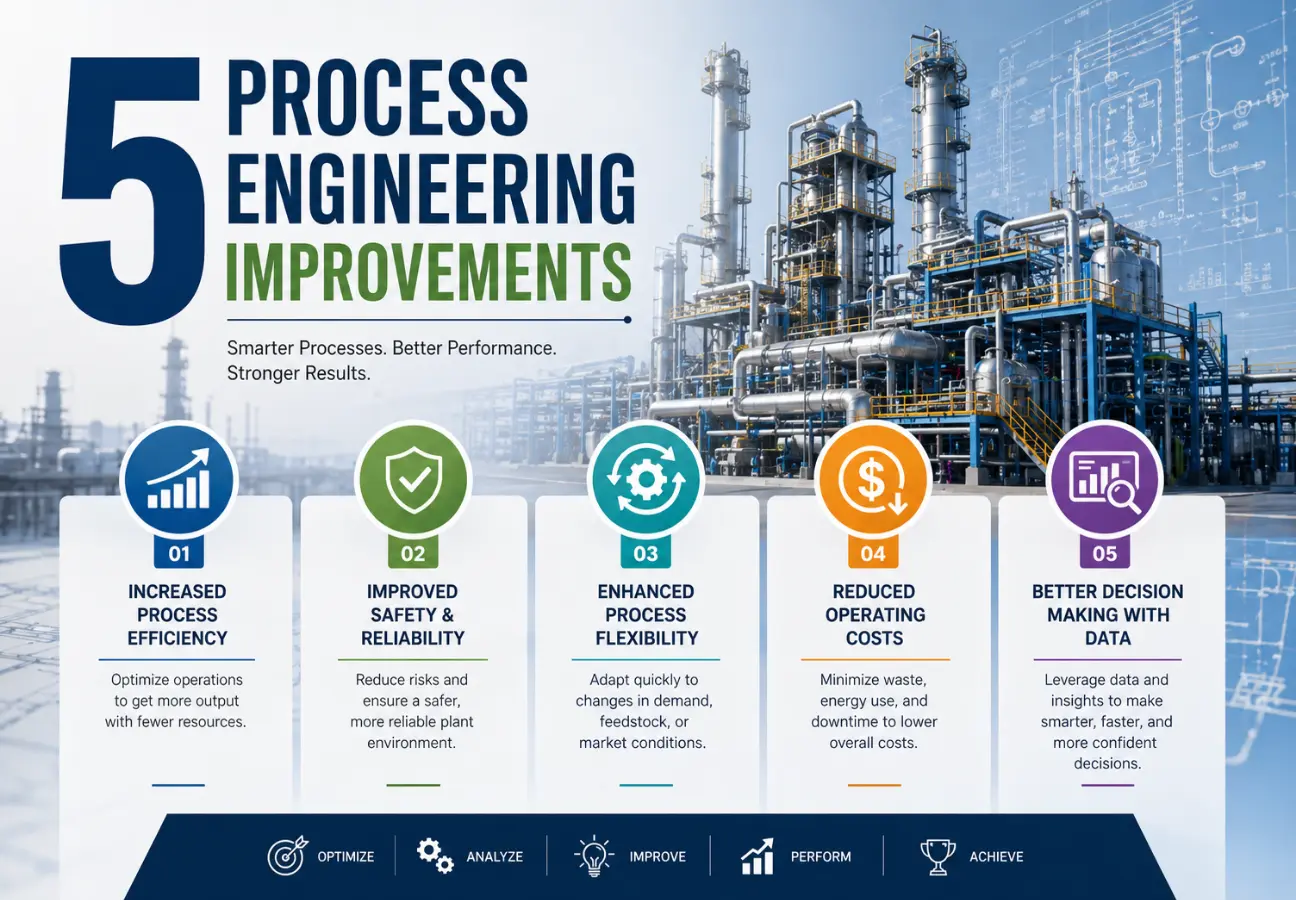
5 Process Engineering Improvements That Help Industrial Clients Cut Costs by 30%
Quick Answer:
Process engineering improvements reduce industrial costs by optimizing workflows, improving energy efficiency, upgrading equipment, minimizing waste, and implementing predictive maintenance. These strategies can cut operational costs by up to 30% while improving efficiency and performance.
Lowering operating expenses without sacrificing performance is crucial in today's competitive industrial environment. Rising energy prices, inefficient workflows, and equipment downtime can significantly impact profitability.
This is where process engineering improvements play a critical role.
At HaddyGroup, we've helped industrial clients identify inefficiencies and implement targeted solutions that deliver up to 30% cost savings—while improving productivity and operational efficiency.
In this comprehensive guide, you'll discover five proven process engineering strategies that drive measurable results and learn how to apply them in your plant.
Why Process Engineering Improvements Matter
Common Cost Challenges in Industrial Plants
Industrial operations often face multiple efficiency challenges:
Impact: These challenges directly reduce profitability and operational efficiency.
How Process Engineering Reduces Costs
Result: Companies that invest in process optimization can achieve significant cost reductions and productivity gains.
5 Proven Process Engineering Improvements
1. Process Optimization and Workflow Redesign
Challenge: Inefficient workflows are one of the biggest hidden cost drivers in industrial operations.
What We Did
Results Achieved
Impact: Optimized workflows lead to faster production and reduced operational expenses.
2. Energy Efficiency Optimization
Challenge: Energy is one of the largest operational costs in industrial plants, often accounting for 20-30% of expenses.
What We Did
Results Achieved
Impact: Energy optimization delivers both immediate cost savings and long-term sustainability benefits.
3. Equipment Upgrade and Automation
Challenge: Outdated equipment often leads to inefficiency, high maintenance costs, and reduced productivity.
What We Did
Results Achieved
Key Insight: Automation improves accuracy, consistency, and cost efficiency.
4. Waste Reduction and Resource Optimization
Challenge: Material waste directly affects profitability and contributes to environmental concerns.
What We Did
Results Achieved
Impact: Efficient resource utilization boosts margins and reduces environmental impact.
5. Predictive Maintenance Implementation
Challenge: Reactive maintenance is expensive, disruptive, and often leads to unplanned downtime.
What We Did
Results Achieved
Impact: Predictive maintenance ensures smooth operations and effective cost control.
Note: Strategic process engineering improvements—focused on optimization, energy efficiency, automation, waste reduction, and predictive maintenance—can reduce industrial costs by up to 30% while improving operational performance.
How to Implement Process Engineering Improvements
Conduct a Process Audit
Perform a comprehensive audit of your current operations to identify inefficiencies, bottlenecks, and cost drivers. This baseline understanding is crucial for setting realistic improvement targets.
Prioritize High-Impact Areas
Focus your efforts on areas that will deliver the greatest return on investment (ROI). Not all improvements have equal impact—prioritization ensures maximum efficiency gains.
Implement Targeted Solutions
Apply specific improvements such as automation, workflow optimization, energy management, and predictive maintenance. Implement in phases to minimize disruption while maximizing learning.
Monitor and Optimize Continuously
Track performance metrics and KPIs throughout implementation. Refine processes based on real-world results and emerging best practices.
Continuous Improvement Philosophy: Process engineering is an ongoing journey. Small, continuous improvements compound over time to deliver substantial cost and efficiency gains.
Structured Insights: Cost Reduction Strategies
Cost Reduction Strategy Comparison
| Strategy | Cost Impact | Implementation Time | ROI Timeframe |
|---|---|---|---|
| Workflow Optimization | 10-15% cost reduction | 2-4 months | 3-6 months |
| Energy Optimization | 15-25% cost reduction | 1-3 months | 6-12 months |
| Equipment Automation | 20-30% cost reduction | 4-8 months | 1-2 years |
| Waste Reduction | 10-20% cost reduction | 1-2 months | Immediate |
| Predictive Maintenance | 15-25% cost reduction | 3-6 months | 6-12 months |
Enabling Technologies for Process Engineering
Integration Note: These technologies support digital transformation and Industry 4.0 initiatives, enabling smarter industrial operations.
Real-World Use Case: Manufacturing Plant Transformation
A mid-sized manufacturing plant implemented comprehensive process engineering improvements:
Implementation Strategy
Results Achieved
FAQs
Final Review
Process engineering improvements are one of the most effective ways to reduce industrial costs and improve operational performance. By systematically implementing workflow optimization, energy efficiency improvements, automation, waste reduction, and predictive maintenance strategies, companies can achieve substantial cost savings.
Key Takeaway: The combination of these five improvements can deliver up to 30% cost reduction while simultaneously improving productivity, reliability, and sustainability.
Conclusion
Implementing the right process engineering improvements can transform your industrial operations and significantly impact your bottom line.
From workflow redesign to predictive maintenance, these strategies help:
The key to success is identifying the right opportunities for your specific operation and executing them effectively. Process engineering improvements are not a one-time event but a continuous journey of optimization and enhancement.
Ready to Cut Costs and Improve Efficiency?
Partner with HaddyGroup to assess your operations, identify improvement opportunities, and implement proven process engineering solutions that deliver measurable results.
Get Your Process Audit Today