
EPC vs EPCM Contracts: How to Choose the Right Engineering Delivery Model for Industrial Project Success
Choosing between EPC vs EPCM contracts can significantly impact the success of your industrial project.
Whether you're building a new plant, expanding operations, or upgrading existing systems, your engineering delivery model determines project cost, timeline, risk distribution, and execution efficiency.
Many industrial companies struggle with budget overruns, project delays, and lack of control or transparency. The right delivery model eliminates these challenges.
In this guide, you'll learn:
What Is an Engineering Delivery Model?
An engineering delivery model defines how an industrial project is designed, procured, and executed. It determines responsibilities, cost structure, risk allocation, and project control between the client and contractors.
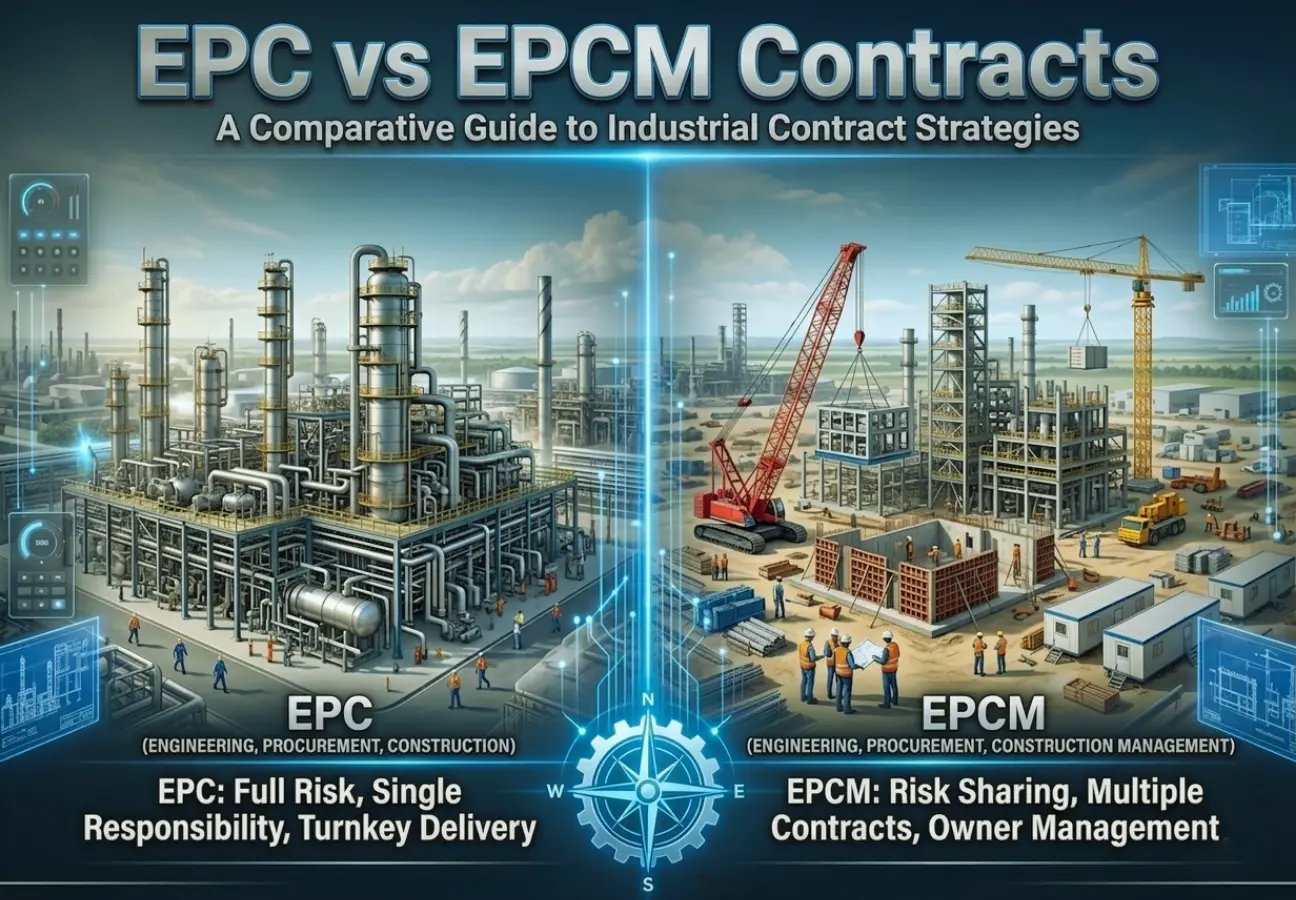
EPC vs EPCM in One Line: EPC is a fixed-price, contractor-led model with low client involvement, while EPCM is a flexible, client-controlled model with shared responsibility and greater transparency.
What Is the Difference Between EPC and EPCM?
EPC Contract
A turnkey model where a single contractor handles the entire project with fixed cost and minimal client involvement.
EPCM Contract
A flexible model where the contractor manages execution while the client retains control, allowing customization and cost optimization.
EPC vs EPCM: Which Is Better?
Why the Right Engineering Delivery Model Matters
Selecting the right model directly affects your project's success. A wrong choice can lead to delays, cost overruns, and inefficiencies.
EPC vs EPCM: Key Differences Explained
01. What Is an EPC Contract?
An EPC contract (Engineering, Procurement, Construction) is a turnkey model where one contractor is responsible for the entire project lifecycle.
Key Features
Advantages
Challenges
02. What Is an EPCM Contract?
An EPCM contract (Engineering, Procurement, Construction Management) involves a contractor managing the project while the client retains ownership and control.
Key Features
Advantages
Challenges
EPC vs EPCM: Side-by-Side Comparison
| Factor | EPC | EPCM |
|---|---|---|
| Responsibility | Single contractor | Shared |
| Cost Structure | Fixed | Flexible |
| Client Involvement | Low | High |
| Risk | Contractor | Shared |
| Flexibility | Limited | High |
Key Takeaway:
How to Choose Between EPC and EPCM
1. Evaluate Project Complexity
2. Assess Internal Capabilities
3. Understand Risk Tolerance
4. Consider Budget Flexibility
5. Analyze Timeline Requirements
When to Choose EPC vs EPCM
When EPC Is the Better Choice
Choose EPC if you need turnkey delivery, minimal involvement, and predictable cost and timeline.
Best For: Greenfield projects, standard plant designs, time-sensitive projects
When EPCM Is the Better Choice
Choose EPCM if you want greater control, flexibility in design, and cost optimization.
Best For: Brownfield expansions, complex projects, innovation-driven environments
Strategic Insight
EPC is a risk-transfer model focused on simplicity and speed, while EPCM is a collaborative model focused on flexibility and optimization. Companies with strong internal capabilities often benefit more from EPCM, while those seeking minimal involvement prefer EPC.
EPC vs EPCM Cases
EPC Case
A company building a new industrial plant selected EPC for faster execution and cost certainty.
Results:
EPCM Case
A plant expansion project used EPCM for greater flexibility and design control.
Results:
Quick Summary
EPC and EPCM are two major engineering delivery models used in industrial projects. EPC offers a turnkey, fixed-cost solution with low client involvement, while EPCM provides flexibility, transparency, and shared control. The best choice depends on project complexity, budget, timeline, and internal expertise.
Key Insights
FAQs: EPC vs EPCM Contracts
Conclusion
Selecting the right engineering delivery model for industrial project execution is a critical decision that directly impacts project success.
The comparison of EPC vs EPCM contracts shows that each model has unique strengths depending on your goals. By aligning your project complexity, risk tolerance, budget, and internal expertise, you can ensure efficient execution, cost control, and long-term success.